
Scientific framework and research objectives
Background and rationale
Metastatic breast cancer continues to pose a clinical challenge, with patient survival heavily dependent on the precision of treatment strategies, requiring precise response assessment.
Current international standards predominantly rely on contrast-enhanced computed tomography (CE-CT) interpreted via RECIST 1.1 criteria. However, these approaches exhibit notable limitations—particularly in cases of bone-predominant disease, where lesions are frequently non-measurable, and response evaluation becomes ambiguous.

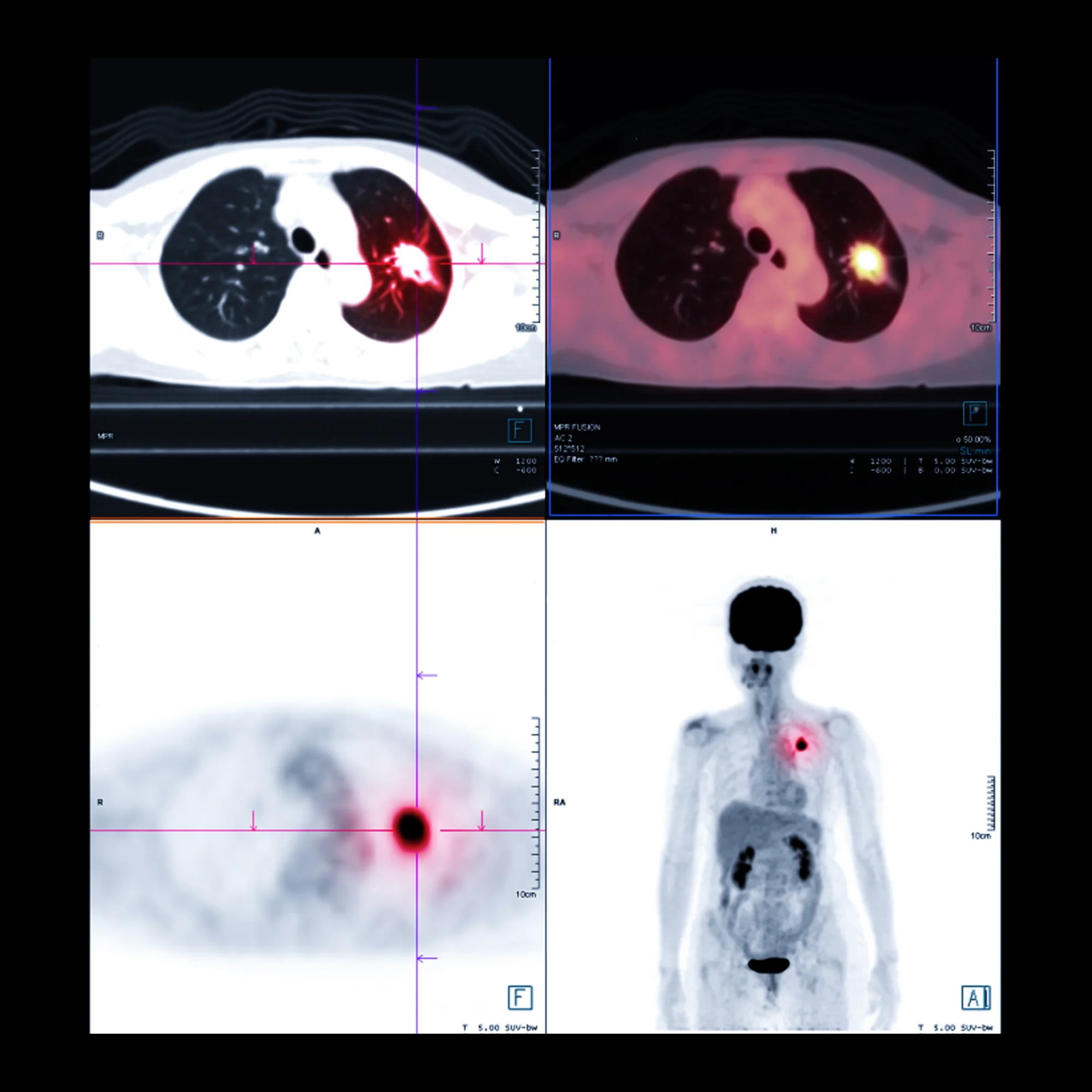
Emerging evidence underscores the superior diagnostic performance of fluorodeoxyglucose positron emission tomography/computed tomography (FDG-PET/CT), which offers enhanced sensitivity and specificity for staging and longitudinal response monitoring of patients with metastatic breast cancer.
By enabling earlier detection of disease progression, FDG-PET/CT holds promise for optimising therapeutic strategies and improving both overall survival and health-related quality of life.
Despite these advantages, routine adoption of FDG-PET/CT remains constrained by the lack of level I evidence, the absence of harmonised workflows, and limited integration into healthcare systems.
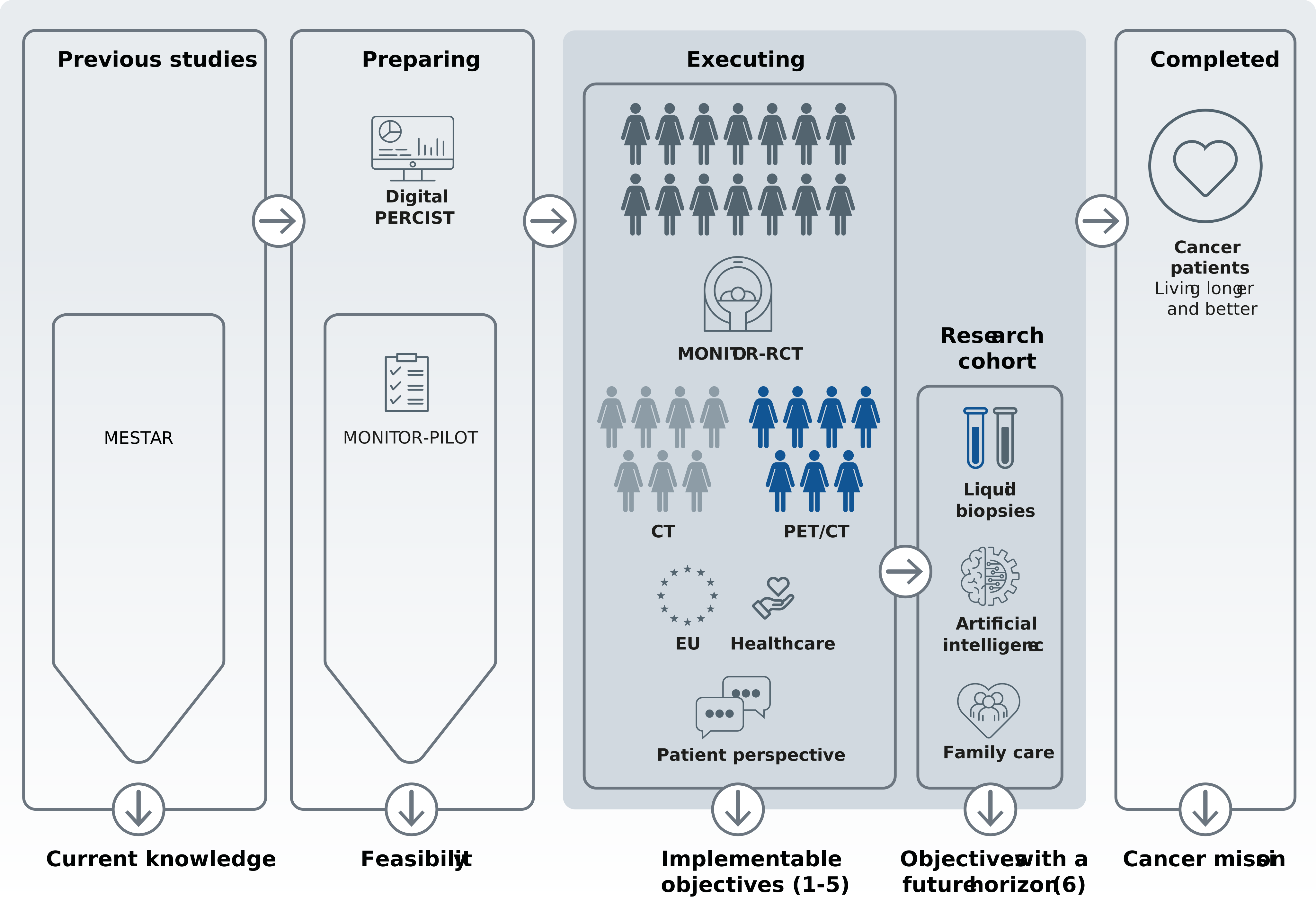
PREMIO COLLAB seeks to bridge these gaps through a pragmatic, multicenter randomised controlled trial (MONITOR-RCT), to establish robust evidence and facilitate clinical implementation.
Scientific objectives
Our overarching aim is to establish an evidence-based practice model for FDG-PET/CT-guided monitoring in metastatic breast cancer and deliver the tools and frameworks required for clinical uptake at scale.
Generate level I evidence
We are conducting a multicentre randomised controlled trial comparing FDG-PET/CT against CE-CT for response monitoring in metastatic breast cancer. The primary endpoint is overall survival, while secondary endpoints include health-related quality of life (HRQoL), treatment exposure, and cost-effectiveness.
Develop digital workflow solutions
We are implementing Digital PERCIST, operationalising the PET Response Evaluation Criteria in Solid Tumours (PERCIST) to enable standardised, semi-quantitative assessments that support decision-making and comparisons across institutions.
Advance response evaluation criteria
Through empirical validation and a structured consensus process, we are refining PET/CT-based response evaluation criteria relevant for metastatic breast cancer patients. We investigate alternative parameter settings and AI-assisted approaches to enhance the reproducibility and predictive performance of the criteria.
Integrate artificial intelligence
We are developing and validating AI-based tools for automated image classification and report generation, leveraging deep architectures such as Bayesian CNNs and vision transformers. In parallel, we are exploring AI strategies to detect earlier progression and minimise radiation dose.
Explore liquid biopsy as a monitoring modality
We are establishing proof-of-concept for circulating tumour DNA (ctDNA) as a complementary—or potential gatekeeping—approach to imaging. Whole-genome sequencing and advanced machine learning (MRD-EDGE) are being used to improve sensitivity and uncover actionable targets.
Perform health technology assessment (HTA) and policy analysis
We are evaluating the cost-effectiveness across European healthcare systems, translating robust economic analyses into clear, country-specific guidance to inform evidence-based implementation and reimbursement decisions.
Integrating monitoring into the life of patients and their families
Ensuring monitoring strategies fit into daily routines by incorporating the perspectives of all stakeholders, including patients, families, and clinicians—to create solutions that are both practical and supportive.
Methodology
MONITOR‑RCT design
This pragmatic, international, multicentre trial aims to enrol 420 patients with newly diagnosed metastatic breast cancer and randomise them 1:1 to FDG-PET/CT or CE-CT-based monitoring every 9–12 weeks, reflecting real-world scheduling.
Endpoints
The primary endpoint is overall survival. Secondary endpoints include HRQoL measured using validated instruments (FACT-B and EQ-5D-5L), cumulative treatment exposure, and incremental cost-effectiveness ratios (ICERs).
Serial liquid biopsies, low‑dose CT, and extended patient‑reported outcome measures (PROMs) will be applied in relevant patient cohorts to deepen biological and patient‑centred insights.
Data management and sharing
All data will be captured in a secure REDCap environment, with FAIR‑compliant sharing and open‑science practices to promote transparency, reproducibility, and secondary use.
Innovation
PREMIO COLLAB is intentionally integrative—combining clinical evidence generation, digital workflow optimisation, AI‑enhanced imaging and genomic biomarker research within one program. This design ensures translational relevance and accelerates adoption from trial to practice.
Human Oversight and Control over AI-development
Throughout the PREMIO COLLAB project, AI-supported tools are used for research purpose and contribute to patient care in and indirect and supportive manner. The AI-tools assist in nuclear medicine specialists in quantifying metabolic activity under clinician oversight. This quantification – together with other signs such a new lesions and visual inspection – supports the preparation of the clinical report. The clinician makes the final suggestions for treatment by integrating these suggestions with the broader clinical context.
As part of the retrospective evaluations, clinicians review all AI‑
generated insights through a structured double‑reading process, comparing automated suggestions with independent expert assessments. Any differences identified are systematically recorded in a dedicated bias and error registry within the RECOMIA platform, where clinical and technical teams collaborate to understand underlying causes and continuously improve the tools.
Recommendation for future use in clinical use of AI-supported tools developed within PREMIO COLLAB will consistently promote workflows that ensure oversight and control by the treating clinician.
Expected Impact
The anticipated outcomes of PREMIO COLLAB extend well beyond incremental improvements—we aim to redefine the standard of care for monitoring treatment response in metastatic breast cancer.
By generating high-level evidence and embedding advanced digital and molecular tools into clinical workflows, this program seeks to deliver a paradigm shift in how treatment response is assessed, interpreted and acted upon. These efforts will not only enhance diagnostic precision but also accelerate decision-making, improve quality of life for patients and inform sustainable health policy across diverse healthcare systems.

Conclusion
Collectively, these outcomes position PREMIO COLLAB as a transformative program in metastatic breast cancer care, shifting monitoring from a morphology-driven paradigm to an integrated, evidence-based model that combines advanced imaging, artificial intelligence and molecular biomarkers. By doing so, we aim to refine clinical decision-making, prolong patient survival, improve quality of life, and provide a scalable framework for precision oncology across diverse healthcare systems.
Follow us
Learn more about our mission, explore our research, and join us in creating better outcomes for patients everywhere.